HelioKron /
How Are Sunrise and Sunset Times Calculated?
How date, latitude, longitude, Earth’s tilt, the solar disk, and atmospheric refraction determine sunrise and sunset times.
Read guideClear explanations of the astronomy and ocean science behind tide, moon, sun, and planetary timepieces.
HelioKron /
How date, latitude, longitude, Earth’s tilt, the solar disk, and atmospheric refraction determine sunrise and sunset times.
Read guideLunaKron /
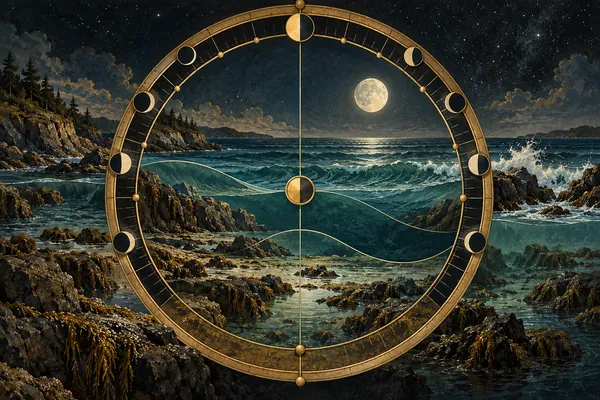
How moon phase clocks follow the 29.53-day synodic month, why traditional mechanisms drift, and how automatic clocks stay aligned.
Read guideOrbiKron /
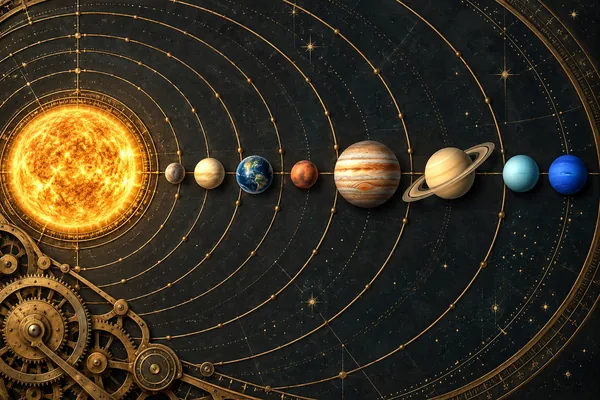
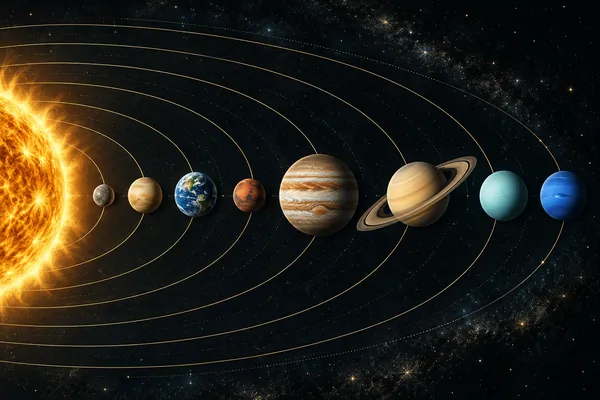
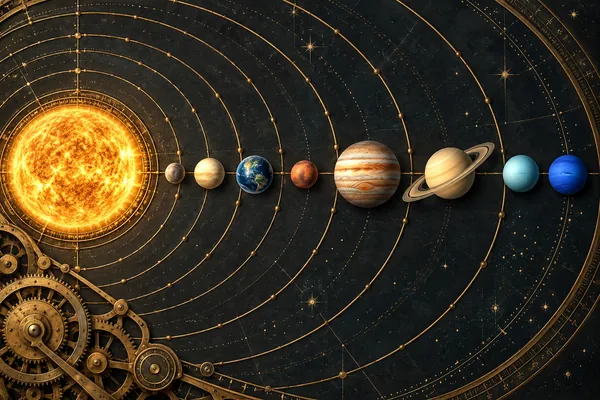
How gears, orbital periods, ephemerides, and visual scaling let mechanical and electronic orreries represent planetary motion.
Read guideOrbiKron /
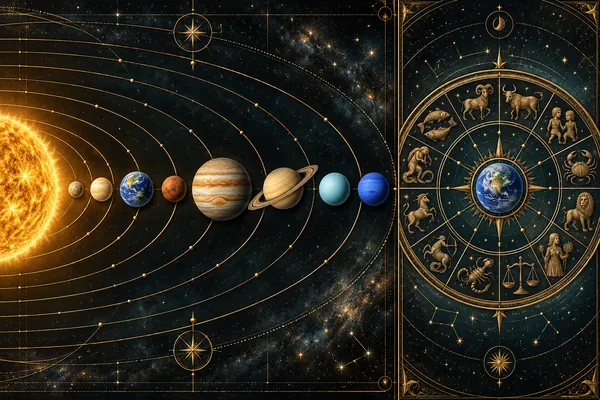
Why OrbiKron shows planets around the Sun rather than zodiac signs: the differences in viewpoint, retrograde motion, and purpose between an astronomical orrery and an astrology chart.
Read guideNautiKron /
Why Cook Inlet’s huge tidal range, shallow water, and tidal bores challenge ordinary tide clocks, and how NautiKron calculates the local tide.
Read guideOrbiKron /
Understand heliocentric planet positions, orbital longitude, and how an electronic orrery turns current ephemeris data into light.
Read guideOrbiKron /
An introduction to mechanical and electronic orreries, their history, and the compromises involved in displaying the solar system.
Read guideNautiKron /
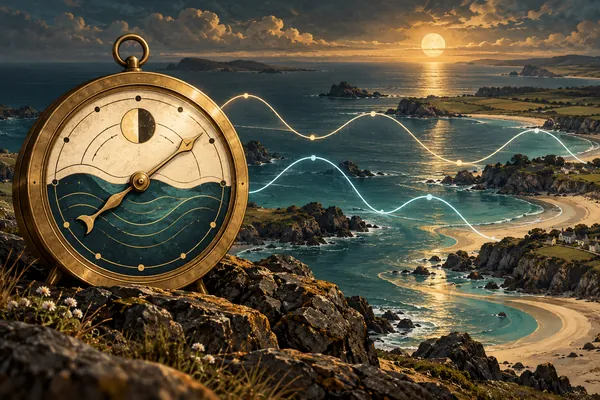
Learn how mechanical and data-driven tide clocks estimate the rise and fall of the sea, and where their predictions differ.
Read guideNautiKron /
Traditional tide clocks assume a repeating semidiurnal cycle. Learn why local harmonics and subordinate stations make real tides more complex.
Read guideNautiKron /
Why Puget Sound needs a location-aware tide clock, how its mixed tides vary by port, and what to look for in a useful display.
Read guide